Hobbykassen Stappaerts logo

Materials & Options

Raised ridge

Used HBS HBS mini
Raised ridge

All our new greenhouses are available in a raised model (+35cm). This has several advantages:

  • More headroom, so you are less likely to bump your head.
  • Reduced risk of plant scorching.
  • More volume → more stable temperature.

Foundation

Used HBS HBS mini

For a greenhouse we can offer several foundation systems. Below you will find the options:

Concrete foundation

UsedHBS
Concrete foundation

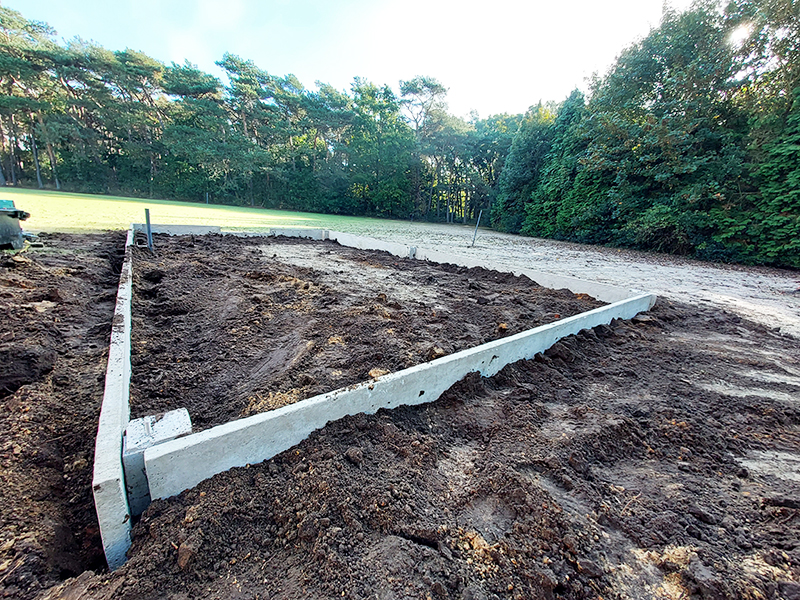
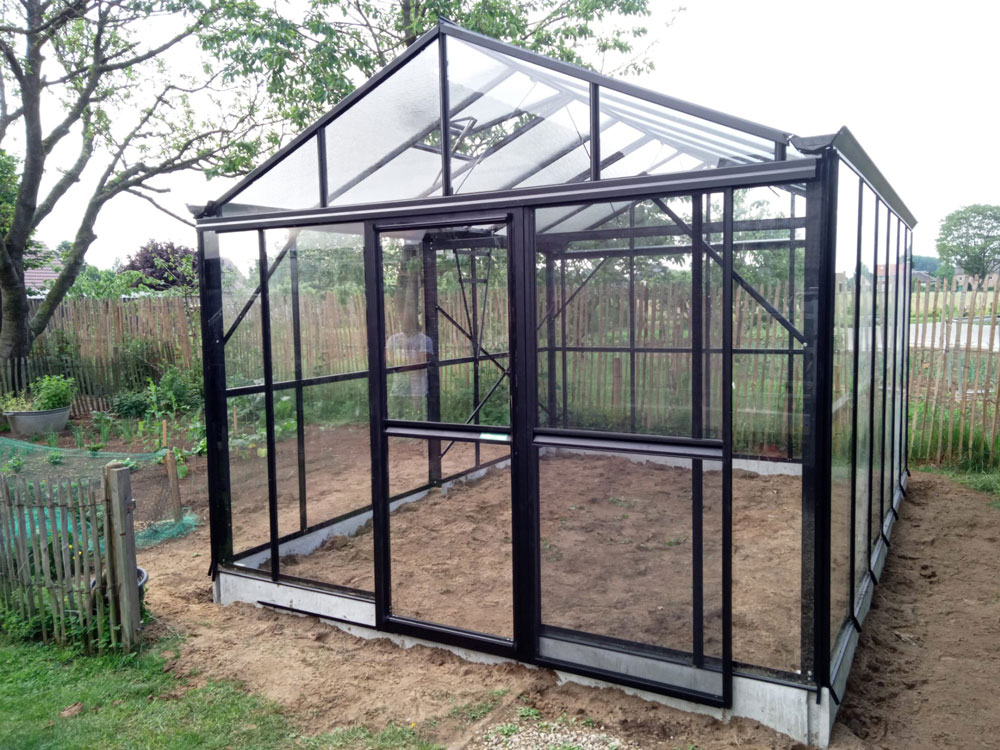
This is our standard foundation and is our strongest and most high-quality option.

Prefabricated concrete posts and slabs with a plinth all around. At the door we provide a lowered threshold for easy access.

Aluminium tube foundation

UsedHBSHBS mini
Aluminium foundation - door

Specially developed to be placed on an existing concrete slab or hard surface (but can also be combined with concrete posts in open ground).

Only a limited height difference can be compensated this way — it is best to level the ground beforehand.

Wider door opening

Used HBS

As standard, a single door of 0.85m is included in the base price of the greenhouse. To be able to enter with larger machinery, such as a rotary tiller, or with large plant pots, it may be worth choosing a wider door opening. We offer two options for this:

  • Single door of 1.50m:
    For technical reasons, the door is not centred on the front side. You effectively enter through the corner of the greenhouse. The clear opening width is 1.45m.
  • Double door:
    With a double door, the opening is centred in the middle of the front side. This means less space is lost inside the greenhouse. The clear opening width is also 1.45m here.

Mesh door / insect screen door

Used HBS HBS mini
Insect screen door

Depending on how the greenhouse is used and the plants you wish to grow, it is not so much flies or other insects you want to keep out, but rather other unwanted visitors such as cats, dogs, pigeons, etc.

This can be achieved by fitting a door with insect mesh, which we call an insect screen door. It ensures good ventilation while keeping unwanted animals out.

Roof windows

Used HBS HBS mini

To ensure good ventilation in the greenhouse, several types of roof windows are available. Below you will find the options:

Manual roof window

UsedHBSHBS mini
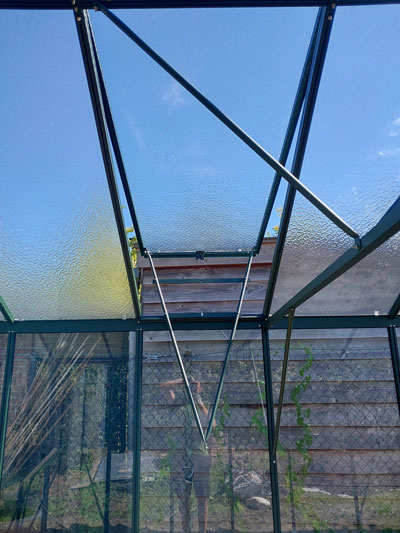
Manual roof window

As the name suggests, this roof window is operated manually. This is done by placing the included operating bracket on the gutter rail in one of two positions.

Depending on the size of the greenhouse, a number of manual roof windows are included as standard in the purchase price.

Automatic roof window

UsedHBSHBS mini
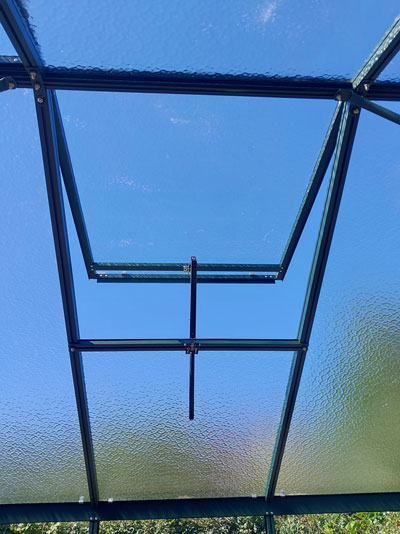
Automatic roof window

As an option, it is also possible to operate the roof windows automatically using autonomous window openers that open based on the ambient temperature. No electricity or batteries are required.

The mechanism works via a hydraulic cylinder (containing biological oil): when the temperature rises, the pressure increases and a piston moves to open the window.

For the best possible air circulation in the greenhouse, we recommend always installing these automatic openers in pairs. This also ensures a constant balance between incoming and outgoing airflow when the wind direction changes.

Glass

Used HBS HBS mini

When choosing glass, light transmission, privacy and safety all play an important role. Below you will find the key information to help you make the right choice.

Which type of glass should I choose?

UsedHBSHBS mini

As standard, our used greenhouses come with used clear horticultural glass. This glass may be somewhat dirty upon delivery or installation and will need to be cleaned afterwards. HBS and HBS mini greenhouses, on the other hand, are fitted as standard with new clear horticultural glass.

If the greenhouse receives a great deal of sunlight, it is worth considering hammered glass for the roof. Hammered glass is a type of diffuse glass that lets through less direct sunlight and scatters light in all directions, resulting in better light distribution inside the greenhouse. Choosing hammered glass for the roof reduces the risk of plants scorching in summer.

In spring, you need as much sunlight as possible in your greenhouse. At that time of year, however, the sun is relatively low, so most light enters through the side walls. A combination of clear glass in the side walls and hammered glass in the roof is therefore often an ideal choice.

If you prefer that neighbours or passers-by cannot see into the greenhouse, hammered glass in one or more side walls is a good solution.

When should I choose toughened safety glass?

UsedHBSHBS mini
  • Hammered glass is less strong: hammered glass has an undulating surface. As a result, it is only 4mm thick at the thickest points and approximately 3mm at the thinnest, making it less strong than clear 4mm glass. For roof glass, toughened safety glass is therefore recommended.
  • Trees nearby: in strong winds, branches, nuts, acorns, etc. can fall onto the roof of the greenhouse. To reduce the risk of damage, both clear and hammered glass can be specified as toughened safety glass.
  • To reduce the risk of hail damage.
  • Children playing near the greenhouse.

Toughened glass

UsedHBSHBS mini

Toughened glass, also known as safety glass, owes its name and properties to an additional thermal treatment. This makes it not only up to five times stronger than standard float glass.

When it breaks, it shatters into thousands of small pieces rather than sharp shards, minimising the risk of serious injury.

Safety glass cannot be cut and must therefore always be produced to the exact dimensions at the glass factory.

Seeding table

Used HBS HBS mini
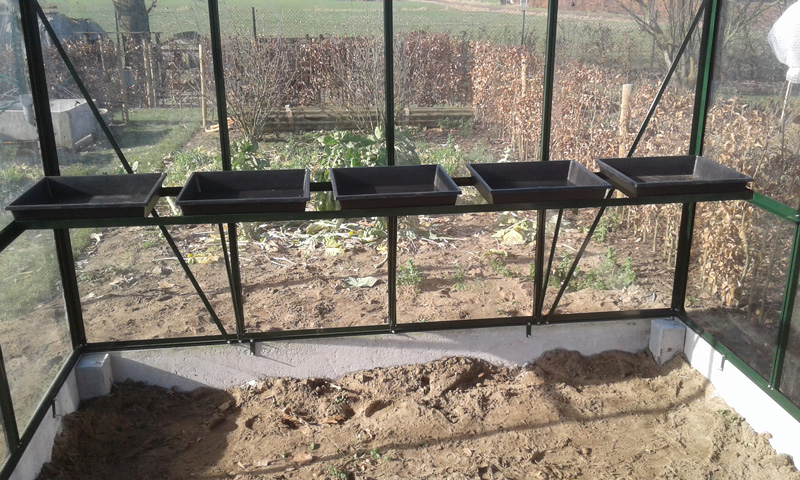
Seeding table

The seeding table is installed as standard against the rear wall of the greenhouse. It consists of both the steel beam and the corresponding seed trays.

On request, the seeding table can also be installed on a side wall. An additional mounting bracket is required for this.

Support tubes

Used HBS
Support tubes

Because our greenhouses feature a very strong steel frame, it is possible to attach support tubes to the crossbeams.

Using strings or cords, various plants such as tomatoes, cucumbers and melons can be guided upwards as they grow. This results in better use of the available space and promotes healthier plant growth.